A small bird with a bright, joyful presence.
A brightness in everyday nature.
For birdwatchers, it’s a reminder that even the smallest birds can bring immense color and character to the world. The common iora is one of Asia’s most charming little birds, easy to overlook because of its size, yet unforgettable once you notice its vibrant colors and lively personality. Found widely across the Indian subcontinent and Southeast Asia, including Thailand, this species thrives in wooded areas, scrublands, gardens, and cultivated landscapes.
Appearance
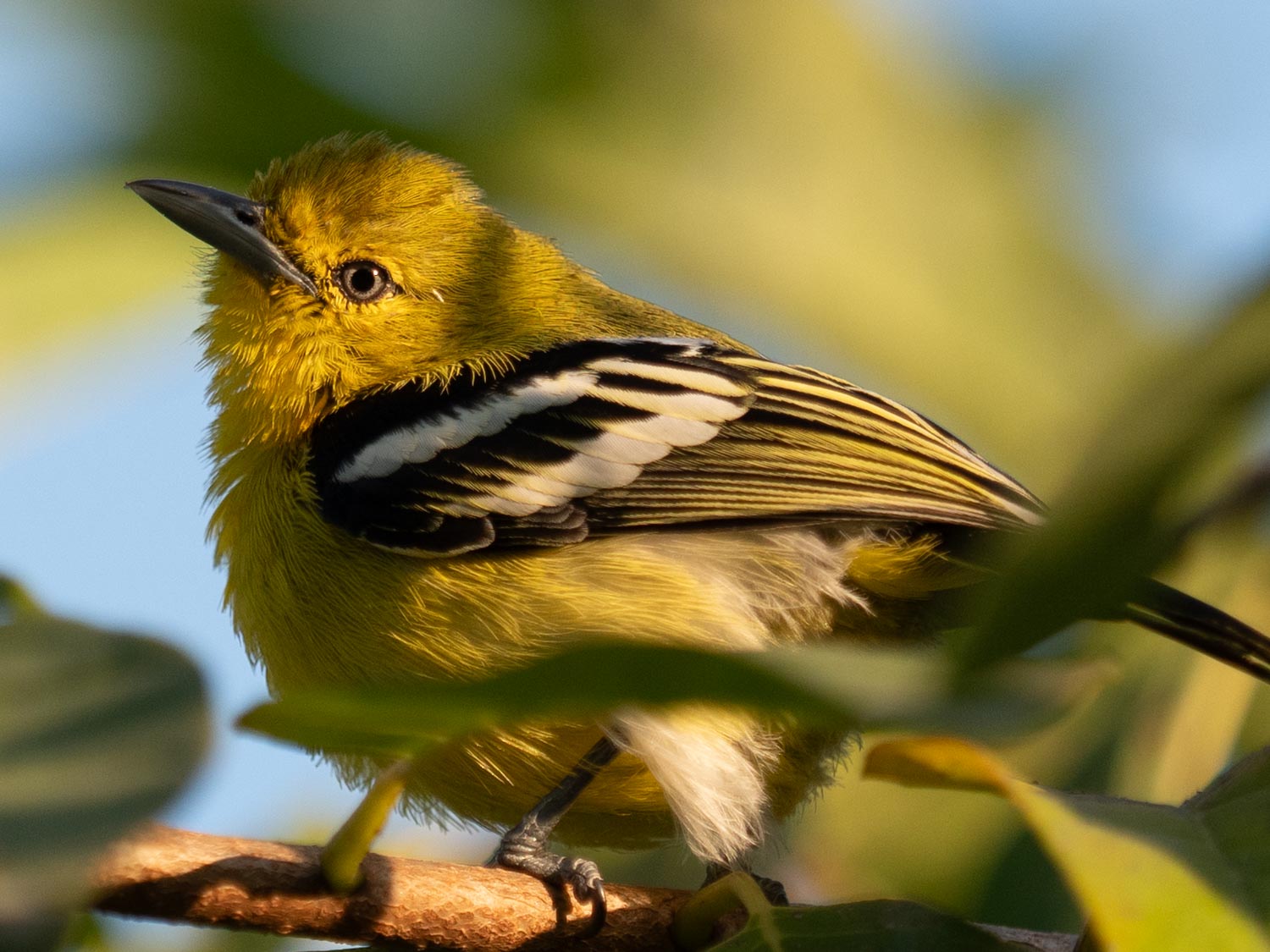
A flash of yellow in the green canopy. The common iora is small, only 11–15 cm long, but its plumage makes a big impression.
Male
Breeding season:
Bright yellow underparts, black upperparts, and white wingbars, a striking contrast that glows in sunlight.
Nonbreeding season:
The black softens into greenish-yellow, blending more with foliage.
Female
More subtle and elegant, with dull green upperparts and pale yellow underparts year-round.
Both sexes share a sharp, pointed beak perfect for catching insects. Distinctive pale blue eyes that give them a curious, alert expression. And a long, fan-shaped tail, especially expressive during displays
The forest’s little musician
The common iora is a vocal bird, often heard before it’s seen.
Calls
Common calls. A clear, whistling “twiii tuiii twiiii”. Soft chirrs and chatters And a trilled song: “wheeeee-tee”. These calls echo through forest edges and gardens, adding a cheerful soundtrack to quiet mornings.
Breeding display
During courtship, the male performs one of the most delightful displays in the bird world: He fluffs up his feathers and spirals through the air, appearing like a floating ball of green, black, yellow, and white. It’s a moment of pure joy—nature’s confetti in motion.
Habitat
The common iora is widespread across India, Sri Lanka, Myanmar, Thailand, Cambodia, Vietnam, China, Indonesia, and the Philippines. In Thailand, it is commonly seen in forest edges, parks and gardens, light woodland, farmland with scattered trees. Its adaptability makes it a familiar companion in both rural and suburban landscapes.
Diet & foraging
The iora is primarily insectivorous, feeding on caterpillars, beetles, mall insects hidden among leaves. Its agile movements, hopping, flitting, and hanging upside down. Make it a lively presence in the canopy.
Taxonomy & subspecies
The species shows notable plumage variation, leading to 11 recognized subspecies across its range. These variations reflect local environments and evolutionary history, making the Iora a fascinating subject for ornithologists.
Beyond its beauty
The common iora plays an important ecological role, controls insect populations. Adds biodiversity to urban green spaces. And serves as an indicator of healthy, tree-rich habitats.
The common iora may be small, but it carries a bright, joyful energy that lights up the trees it inhabits. Whether you hear its whistling call at dawn or catch a glimpse of its yellow plumage dancing through the leaves, this little bird invites you to slow down, look closer, and rediscover the wonder in everyday nature.