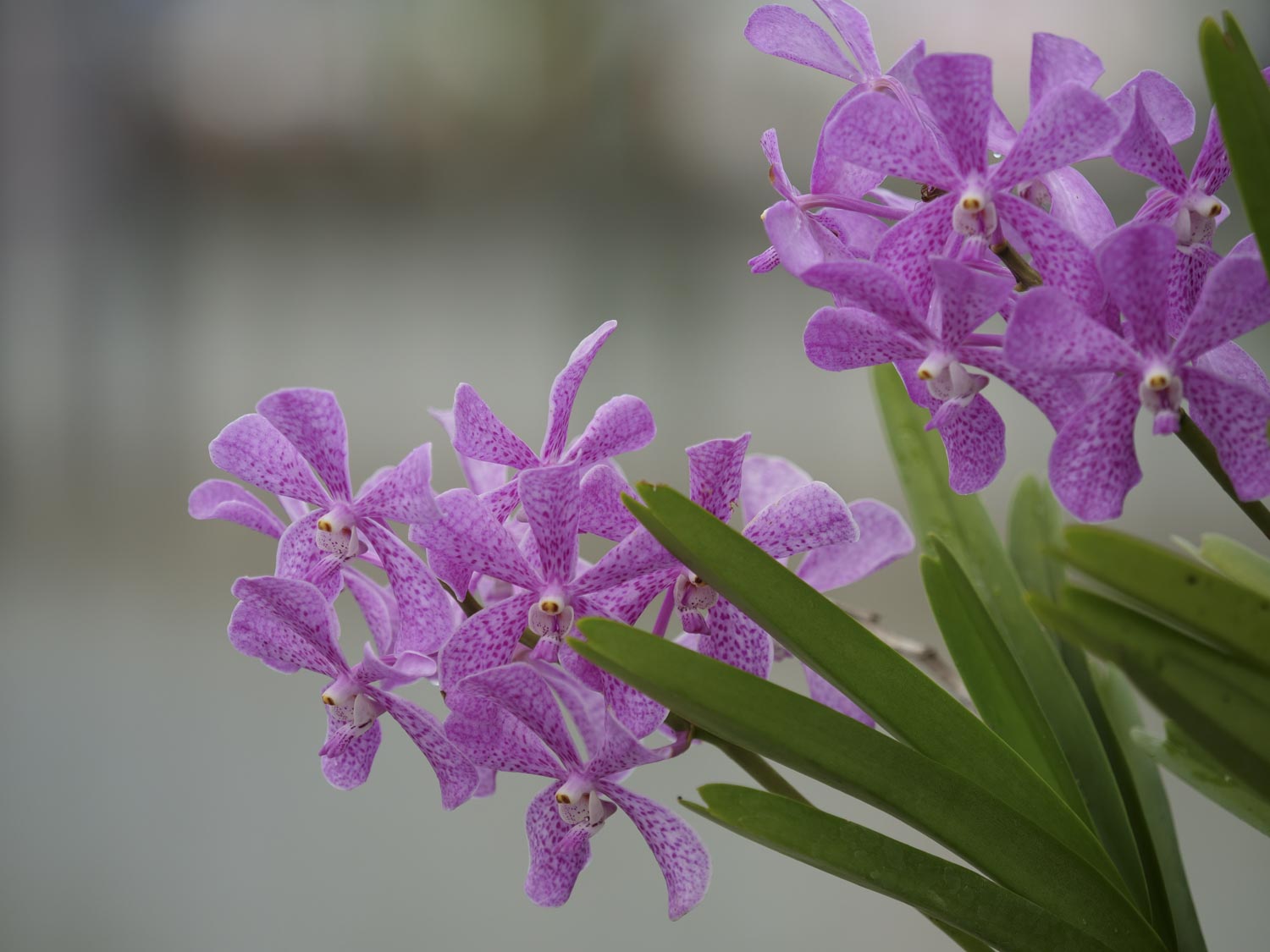
orchid leaves are like tiny solar panels. the amount of sunlight an orchid receives directly affects how much chlorophyll and protective pigments the plant produces, which changes the color of the leaves.
dark green leaves
when an orchid receives less light, it produces more chlorophyll to capture every bit of available energy.
the result is dark green leaves.
many beginners think dark green means healthy, but in orchids it often means the plant could use more light. orchids grown in deep shade may look lush but produce fewer flowers.
medium green leaves
for many orchids, medium green is the sweet spot.
the plant receives enough light to grow strongly without stress, and enough energy to support flowering. many growers consider a grassy or apple-green color ideal for blooming orchids.
light green leaves
light green leaves usually indicate higher light levels.
this is often a good sign if the leaves remain firm and healthy. orchids growing in bright conditions tend to develop stronger roots, thicker leaves, and more frequent blooms.
red, purple, or bronze leaves
when sunlight increases, orchids may produce pigments called anthocyanins.
these red, purple, or bronze tones act like natural sunscreen, helping protect the leaf from excess light.
some orchids naturally develop colorful leaf edges or a purple blush when grown in bright conditions.
this does not necessarily mean the plant is burning. in many cases, it is simply adapting.
yellow leaves
yellowing can be a warning sign.
if leaves become pale yellow and feel hot or dry, the orchid may be receiving too much direct sun. prolonged exposure can damage cells and reduce growth.
sunburn often appears as bleached patches, white spots, or crispy areas on the leaf surface.
orchid examples
- phalaenopsis usually prefer medium green leaves and can burn in strong midday sun
- vanda orchids often tolerate brighter light and may develop a slight yellow-green color when grown well
- rhynchostylis gigantea commonly shows lighter green leaves than phalaenopsis, especially when grown outdoors
- dendrobiums often perform best with brighter light and can develop reddish tones on new growth
the easiest way to read your orchid
instead of asking if an orchid gets enough sunlight, look at the leaves.
- dark green often means more light is needed
- medium green usually means conditions are close to ideal
- red or purple hints indicate bright light adaptation
- yellow or bleached areas may signal excessive sun
the leaves are constantly telling the story of how much light your orchid receives, long before the plant decides to bloom.